The name
In the city of truth, dare to know!
A Greek name, a city that never existed and a Latin motto: three threads that hold together everything we do.
Alétheia and pólis
Aletopoli joins two Greek words: alétheia, truth, and pólis, city. It is the city of truth.
In Greek, alétheia is linked to léthe, oblivion: truth is what is not forgotten, what does not stay hidden. For a publisher that wants to save books from oblivion, the name already says almost everything.
A place of printing that never existed
Between the seventeenth and nineteenth centuries, in a Europe where political and religious censorship controlled what could be printed, many printers used a simple device: on the title page, instead of the real city, they gave an invented place of printing. The book could circulate without exposing whoever had printed it.
Aletopoli was one of these imaginary places. In 1788, for example, the printer Francesco Antonio Mondelli published the Italian translation of a work by François-Xavier de Feller on the Congress of Ems under the false imprint of Aletopoli, as recorded in the Treccani Dizionario Biografico degli Italiani.
A city without walls and without a map, where ideas nonetheless found shelter. This is the legacy we take up: to publish freely, against all censorship.
In Aletopoli sapere aude
Sapere aude.
Horace, Epistles I, 2
Sapere aude, “dare to know”, comes from Horace. In 1784 Immanuel Kant made it the motto of the Enlightenment in his essay An Answer to the Question: What Is Enlightenment?: have the courage to use your own understanding.
“In Aletopoli” also works in Latin: it is the ablative of Aletopolis, like “Neapoli” for Neapolis. It reads as a place of printing, the same kind that appeared on clandestine title pages. Our motto, In Aletopoli sapere aude, therefore means: in the city of truth, dare to know!
The printer’s device
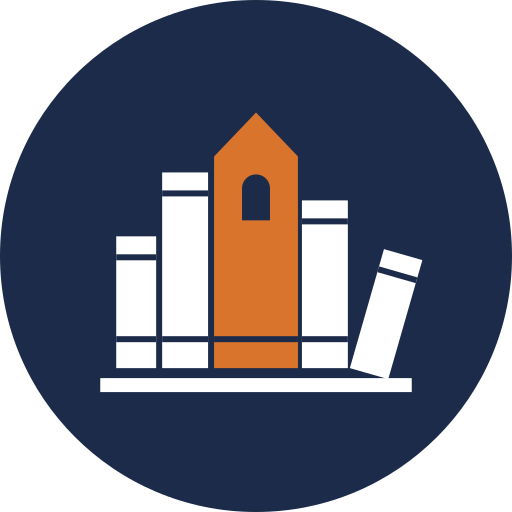
Like the devices of the old printers, our mark is a roundel enclosing an image and a motto. At its centre is the city of books: a row of spines that becomes a skyline, with a tower in the middle. Around it, the words In Aletopoli and Sapere aude.